
The Chain of Survival is a series of critical actions that improve survival for cardiac arrest victims:
- Early Recognition & Call 911
- Quickly identify someone in cardiac arrest.
- Call emergency services immediately.
- Early CPR
- Begin high-quality chest compressions to keep blood flowing.
- Hands-only CPR is effective if rescue breaths aren’t possible.
- Early Defibrillation
- Use a nearby AED as soon as possible.
- Defibrillation restores a normal heart rhythm in many cases.
- Advanced Life Support
- Paramedics provide medications and advanced care.
- Includes airway management and monitoring.
- Post-Resuscitation Care
- Hospital care focuses on stabilizing the patient.
- May include cooling therapy and heart treatments.
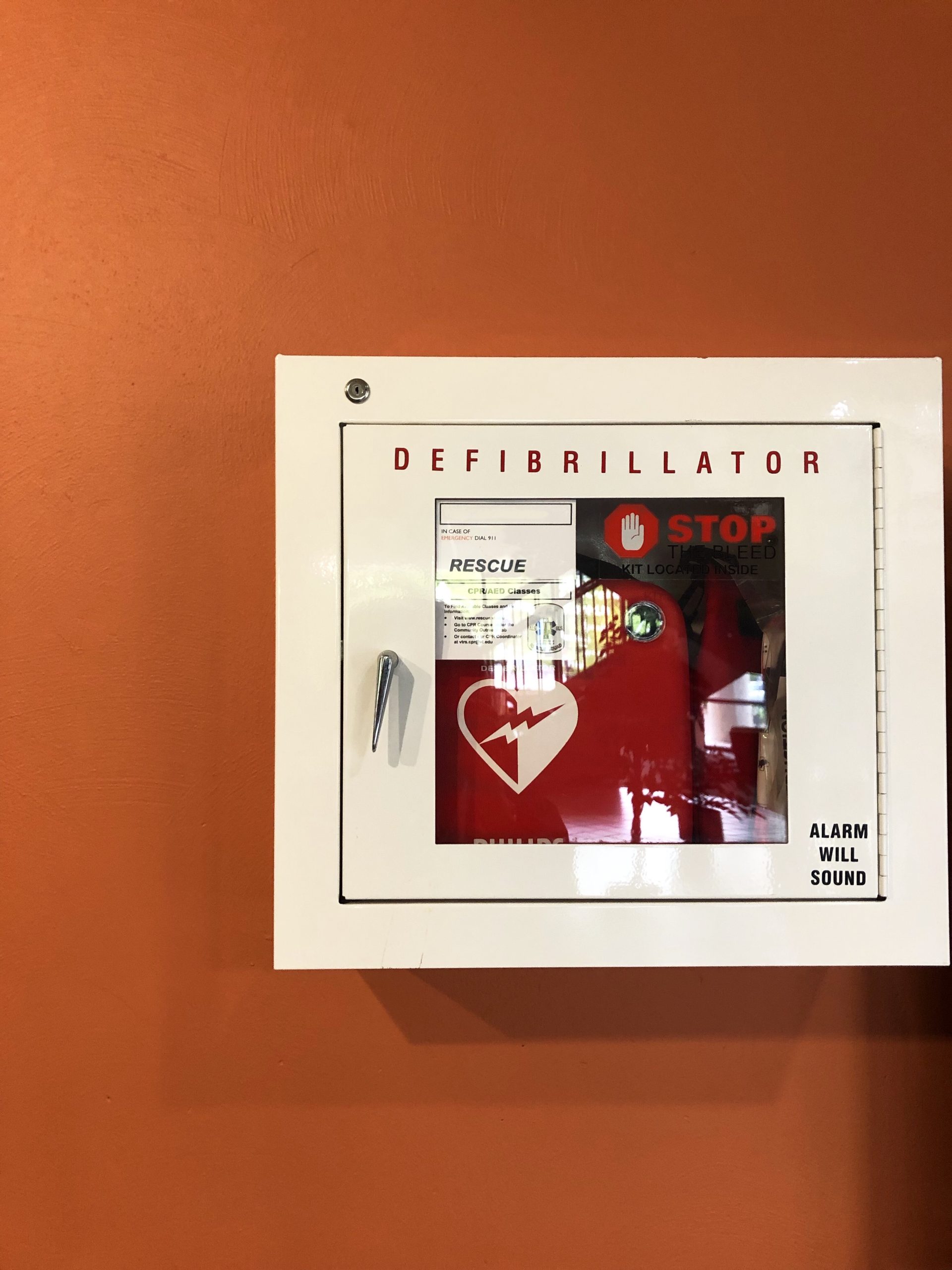
Public Access Defibrillators (AEDs) Facts
- AEDs are designed for anyone to use, even without medical training.
- Using an AED as soon as possible greatly increases survival after sudden cardiac arrest.
- AEDs give voice prompts and visual instructions, guiding users step by step.
- Most public places like schools, gyms, and arenas have AEDs installed.
- Every minute delay in defibrillation decreases survival by 7–10%.
- Modern AEDs are safe, and will not deliver a shock unless it’s needed.
- AEDs can be used on adults and children (with pediatric pads if available).
- Early AED use, combined with CPR, can double or triple survival rates.